Halton Door SpecialistsService bulletin 3 of 3
Extension Spring Replacement: how the work is done
Extension springs are the two long coil springs that run beside the horizontal tracks of a garage door, one on each side.
Oakville, Ontario · Garage Doors · open 24/7
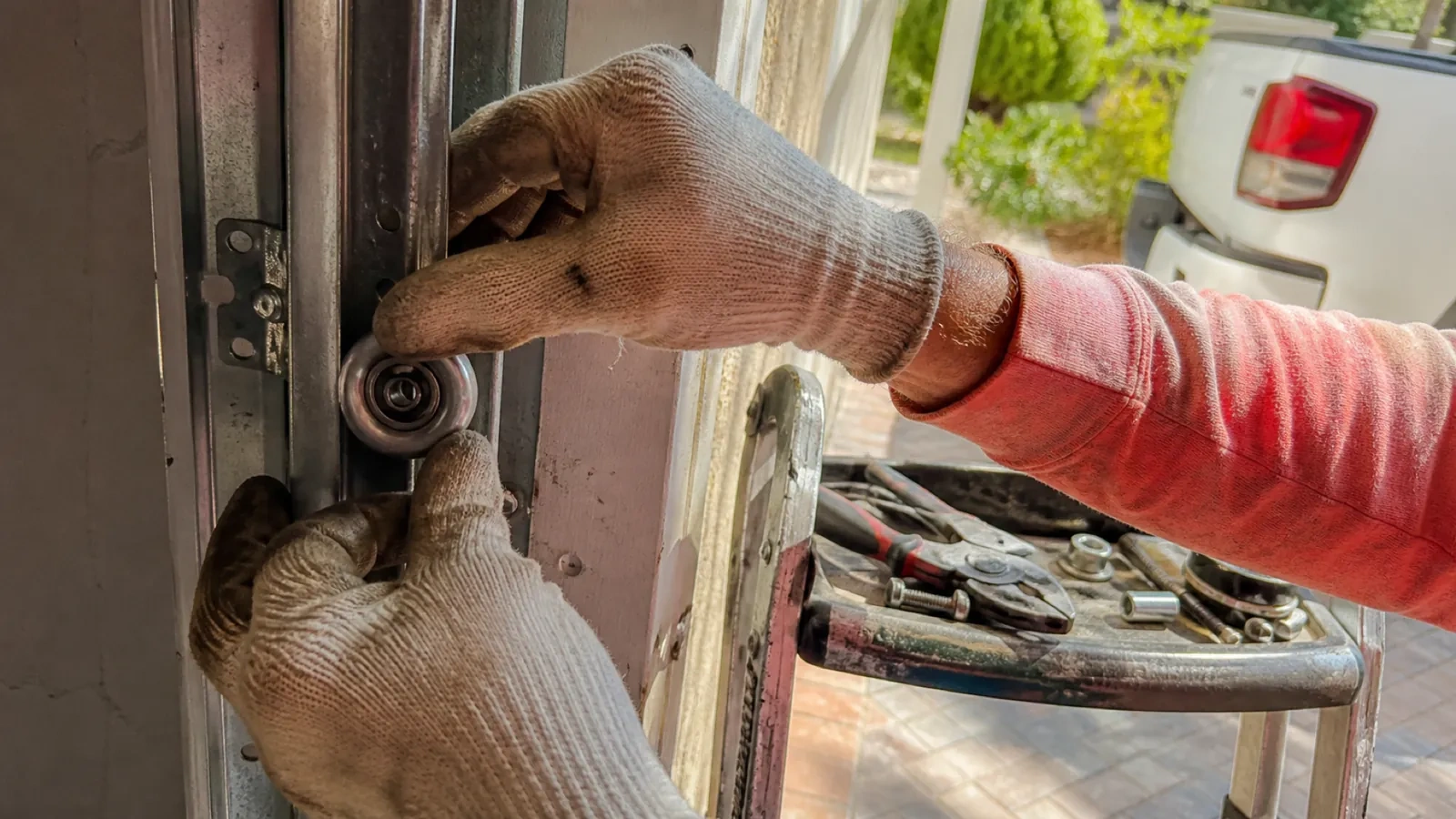
Extension springs are the two long coil springs that run beside the horizontal tracks of a garage door, one on each side. They stretch as the door closes and pull back as it opens, and that pull is what makes a heavy door feel light. Replacement puts a new, matched pair on the door. The technician opens and secures the door so the springs are slack, removes the old set, fits springs rated for the door's actual weight with containment cables through their centres, threads the lift cables over the pulleys, and adjusts both sides until the door balances. The opener is reconnected and tested last.
Torsion or extension, and which extension layout
The technician confirms the counterbalance type before choosing any part. Extension springs hang beside the horizontal tracks, one each side, with a pulley on the front end of each spring and a second, fixed pulley on the track angle near the door opening; the lift cable runs from the bottom corner over both. A torsion system has a spring on a shaft above the opening and belongs to a different service. Extension systems also vary: single or double springs per side on heavier doors, hangers fixed to the ceiling or to the rear track support, and cables that adjust at an S-hook, a clip or an eyebolt. Each affects the parts brought to the job.
Balancing the door by hand
Balance is judged with the opener still disconnected. The technician lowers the door to the floor, then lifts it: it should rise with modest effort, stay put when let go at about waist height, sit steady when fully open, and come down under control rather than dropping. If it sinks, both springs need a little more stretch and each S-hook is moved one hole to take up cable; if it climbs on its own, one hole the other way. Adjustments are always made in pairs, with the door open and clamped again each time, so the two springs stay equal. Two or three rounds usually settle it.
A clear threshold and an honest opener
Two habits protect the new springs from the shocks that shorten a spring's life. The first is the floor: a door that comes down on a bin, a bike wheel or a ridge of packed snow stops short while the springs and cables are still pulling, and the jolt can throw a cable off its pulley. Keep the opening clear and scrape the ice ridge off the threshold before running the door in winter. The second is the opener's force setting. It was set for the newly balanced door; if the door ever seems to need more push, that is the springs asking for attention, not a reason to turn the force up.